
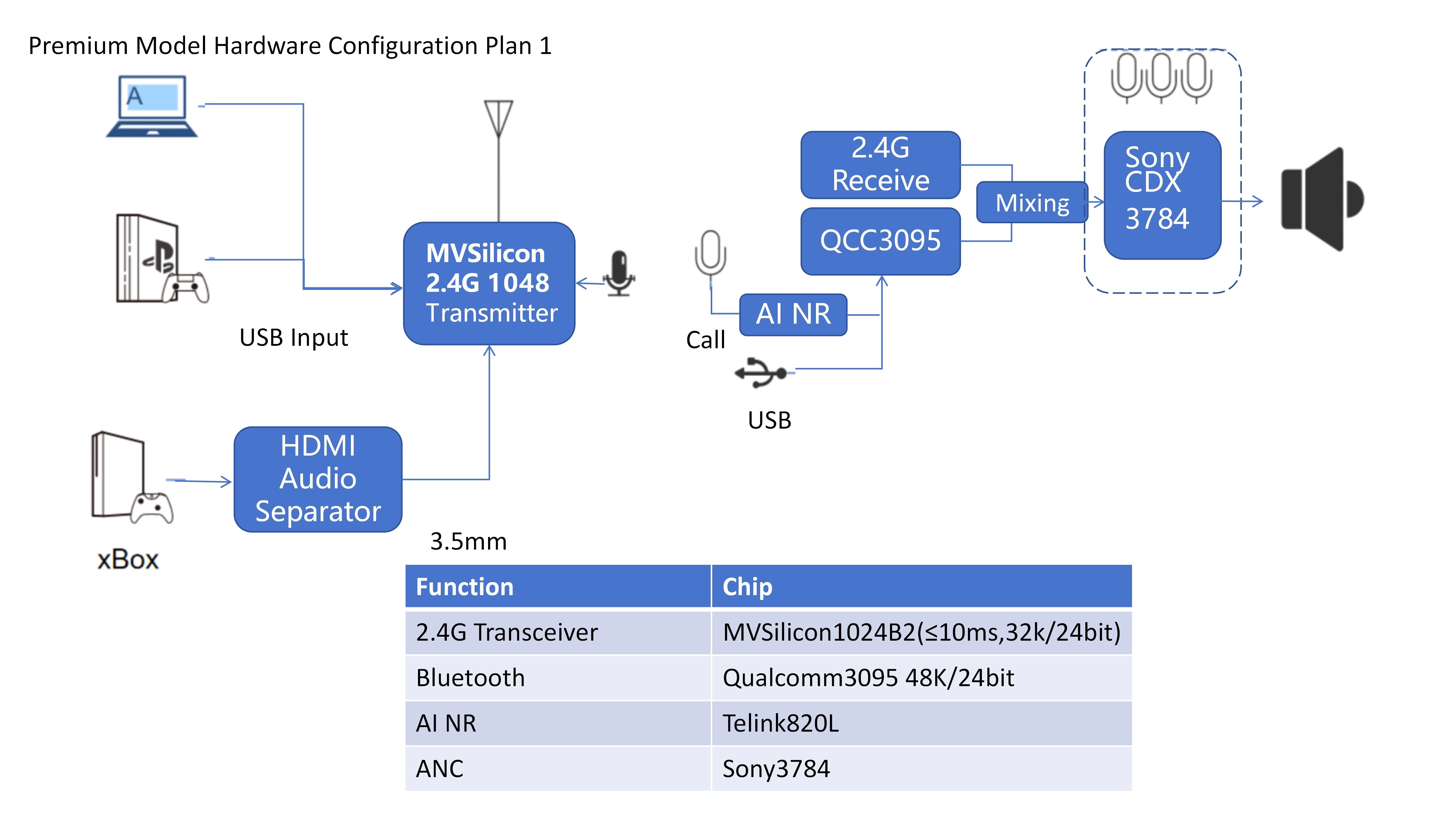
ANC performance begins with an architecture, not a headline number
Active noise cancellation is often presented as a single feature that can be compared with one reduction figure. In a real headphone project, ANC is a system involving microphones, acoustic paths, ear cushions, drivers, signal processing, mechanical design and firmware. The architecture determines what the system can observe and how it creates an anti-noise signal. Feedforward, feedback and hybrid ANC use different microphone positions and control strategies, each with benefits and constraints. For an OEM or ODM buyer, understanding these differences helps improve sample briefs and evaluation. The objective is not to select an architecture only by name. It is to confirm that the complete product provides useful, stable cancellation while preserving sound quality, comfort, call performance and battery behavior.
Start with the physical principle of cancellation
ANC uses microphones to sense unwanted sound and generates a signal intended to reduce the sound reaching the listener. The timing and amplitude must be controlled carefully because the acoustic path changes with frequency, fit and product construction. Cancellation is generally more effective for steady low-frequency noise than for sudden, irregular high-frequency sounds. Ear cushions and passive isolation still matter, especially at higher frequencies. The driver must reproduce music and the cancellation signal without unacceptable distortion or loss of headroom. A useful buyer discussion therefore separates passive isolation, active cancellation and subjective comfort rather than treating ANC as an independent software switch.
Feedforward ANC listens outside the ear cup
A feedforward system places an ANC reference microphone on the outside of the ear cup or earbud. It detects environmental noise before that noise reaches the listener. This gives the processor an early reference and can support cancellation across a useful range. The microphone is also exposed to wind, touch, clothing noise and variations in the external environment. The controller must predict how the sound will travel through the housing, cushion and ear space. If the acoustic model is inaccurate, the system can reduce performance or create artifacts in certain conditions. Mechanical placement, port design and microphone protection are therefore important parts of feedforward performance.
Feedback ANC listens inside the acoustic cavity
A feedback system places the ANC microphone inside the ear cup, closer to the sound experienced by the listener. This allows the controller to observe the combined result of environmental noise, driver output and the local acoustic cavity. It can compensate for some changes in fit and component behavior because it measures the residual sound after the system responds. However, the internal microphone also receives the desired audio signal, and the control loop must remain stable. The design needs careful tuning around the driver, cavity, microphone response and processing delay. Feedback ANC can be effective, but it is not automatically superior to feedforward; its value depends on the implementation and product geometry.
Hybrid ANC combines external and internal references
Hybrid ANC uses both feedforward and feedback microphones. The external microphone provides information about incoming noise, while the internal microphone monitors the result near the ear. This can give the engineering team more information and greater tuning flexibility. It can also increase component count, processing complexity, calibration work, power consumption and sensitivity to microphone placement. A hybrid label does not guarantee a better customer experience. Poor mechanical integration or unstable tuning can underperform a well-designed simpler system. Buyers should treat hybrid ANC as an architecture that requires evidence through model-specific testing, not as a premium claim that proves performance by itself.
Microphone placement can matter as much as microphone quantity
Two headphones with the same number of microphones can perform differently because their positions and acoustic ports differ. An external microphone near a turbulent edge may be vulnerable to wind. An internal microphone can be affected by cavity resonances, driver leakage or cushion geometry. Grilles, meshes and waterproofing materials can change the microphone response. The industrial design must leave enough space and protect the openings without blocking the intended acoustic path. During sample review, ask whether the microphone location is final and whether decorative or sealing changes are planned. A late housing adjustment can require ANC retuning even when the chipset and microphones remain unchanged.
Ear cushions and fit define the acoustic boundary
Over-ear ANC headphones depend on the cushion seal around the head. Glasses, hair, head shape and wearing position can create leakage that changes both passive isolation and the ANC control problem. Cushion foam, covering material, depth and clamping force affect comfort as well as performance. A sample that cancels well on one fixture or reviewer may behave differently across users. The team should evaluate realistic fit variation and avoid tuning that depends on a perfect seal. If the buyer changes the cushion material or geometry for branding or comfort, the revised configuration should be measured and listened to again. The cushion is part of the ANC system, not a cosmetic accessory.
ANC and music tuning must be developed together
Turning ANC on can change the perceived frequency balance because the cancellation filters and acoustic feedback interact with the playback path. A headphone may sound fuller, thinner or louder in one mode. The product team needs to decide which mode defines the primary sound target and how closely other modes should match. Equalization can compensate for differences, but processing headroom and driver capability still apply. Buyers should compare ANC on, ANC off and transparency at consistent perceived levels. The review should include quiet rooms as well as representative noise, because electronic noise or tonal artifacts may be easier to hear without music. Good ANC should support the listening experience rather than forcing a trade between cancellation and sound quality.
Wind noise requires specific mechanical and software work
Wind can create strong turbulence around external microphone ports. The resulting low-frequency energy may be amplified or interpreted incorrectly by the ANC system. Meshes, port geometry, microphone placement and algorithms can all contribute to wind handling. A product intended for commuting or outdoor use should be evaluated in repeatable moving-air conditions and during walking. Some products reduce ANC strength or change mode when wind is detected. The buyer should understand the intended behavior and any effect on sound. A quiet indoor demonstration cannot establish outdoor performance. Wind testing should use the final housing and microphone protection because temporary sample parts may behave differently.
Transparency mode is a separate customer experience
Transparency or ambient mode uses microphones to reproduce outside sound through the headphones. Although it shares hardware with ANC, its goals are different. The mode should provide useful awareness without excessive hiss, harshness, delay or an unnatural sense of distance. Voice frequencies may need special attention. The level should be controlled to avoid sudden discomfort, and transitions between ANC, transparency and off modes should be predictable. Buyers should test conversations, announcements, traffic-like sound and self-voice. If the product supports adjustable ambient levels, define the default and reset behavior. A strong ANC result does not automatically mean transparency mode is ready.
Call microphones and ANC microphones may have different jobs
Headphones can contain several microphones for ANC, voice pickup and noise reduction during calls. Some hardware may be shared, but the signal paths and algorithms are not identical. A product can cancel environmental noise well for the listener while transmitting a weak or distorted voice to the other party. The sample plan should therefore test calls independently across the intended devices and connection modes. Review quiet speech, background conversation, keyboard noise, traffic-like noise and wind where relevant. Ask which microphones operate in each mode and whether firmware changes to ANC could affect calls. Marketing language should distinguish listening noise cancellation from microphone noise reduction.
Latency and processing stability influence the design
The ANC control loop must respond quickly enough to create useful cancellation while remaining stable across units and fit conditions. Additional digital processing can consume resources and introduce delay in some paths. In gaming or video products, the complete audio latency also includes wireless transmission, buffering and application behavior, so ANC architecture is only one part of the result. Buyers should request model-specific measurements under defined modes rather than combining unrelated latency claims. The engineering team should also review start-up behavior, mode switching, sudden loud sounds and maximum output. Pops, oscillation or unexpected level changes indicate integration problems that need correction before approval.
Battery claims must state the ANC condition
Microphones, processing and supporting circuits consume power. Runtime can differ with ANC on, transparency active, connection mode, codec, volume and call use. A responsible product sheet states the test condition rather than presenting one number as universal. During sourcing, ask for battery capacity, charge time and runtime results tied to the final firmware and hardware. If the product changes ANC strength automatically, understand how the runtime test was performed. Battery aging and temperature can also affect customer experience. The goal is not only to maximize the headline duration but to make sure the selected cell and power design support the intended use with acceptable weight, size and charging behavior.
Evaluate ANC with repeatable tests and structured listening
Objective tests can compare attenuation across frequency and reveal differences between revisions. The method, fixture, fit and noise field should be documented. A single maximum number can hide weak performance across the frequencies that matter to users. Listening remains necessary because artifacts, pressure sensation, hiss and sound changes may not be summarized by one curve. Use representative recordings or controlled sources for aircraft-like low-frequency noise, vehicle rumble, office ventilation and speech. Keep the sample position, playback level and mode consistent. Ask reviewers specific questions: which sounds are reduced, does the mode feel stable, does music balance change, and are there distracting artifacts?
Check production variation and calibration strategy
ANC tuning approved on one prototype must be reproducible across production units. Microphone sensitivity, driver response, cushion assembly, vents and cavity dimensions have tolerances. The manufacturer needs appropriate incoming controls, assembly methods and end-of-line checks. Some designs may use calibration steps, while others rely on controlled components and test limits. Buyers should ask how the production process detects missing, blocked or incorrect microphones and whether acoustic checks cover the important ANC behavior. A golden sample can support comparison, but it should be connected to firmware versions, measurements and component records. Consistency is a manufacturing requirement, not only a tuning achievement.
Build an ANC requirement matrix before requesting samples
A useful brief identifies the target use case, product format, connection modes, expected runtime, comfort priorities and noise environments. State whether the project needs feedforward, feedback or hybrid architecture only when there is a technical reason; otherwise describe the customer outcome and allow the engineering team to propose a platform. Include ANC on-off sound consistency, transparency behavior, call requirements, wind use and acceptable controls. Ask which parts can be customized without retuning. This matrix helps compare samples on common criteria and prevents a feature checklist from replacing product evaluation.
Frequently asked questions
Is hybrid ANC always better than feedforward ANC?
No. Hybrid systems provide more information but also require more components and tuning. A well-integrated feedforward or feedback design can outperform a poorly implemented hybrid product. Compare the exact samples and test evidence.
Can ANC remove all voices and sudden sounds?
No. ANC is generally strongest against steady low-frequency noise. Passive isolation, fit and the changing nature of speech influence what the listener hears. Claims should reflect the measured and experienced performance of the specific model.
Does changing the ear cushion require ANC retuning?
It can. Cushion geometry, material and seal alter the acoustic system. Any meaningful cushion change should be evaluated with measurements and listening before it is approved for production.
What should an OEM buyer request with an ANC sample?
Request the model configuration, firmware version, supported modes, stated test conditions, runtime conditions and a clear revision record. Evaluate fit, music, calls, wind and mode transitions using the intended devices.
Approve the complete ANC product, not the architecture label
Feedforward, feedback and hybrid ANC describe how a system senses and responds to noise, but they do not predict the final customer experience by themselves. Microphone placement, cushions, drivers, mechanical construction, algorithms, firmware and production controls determine whether the architecture works well. OEM buyers can reduce risk by defining use cases, comparing all important modes, testing realistic fit and noise conditions, and tying approval to the exact hardware and software revision. Owin Electronic can discuss available ANC platforms and customization options based on the target product, quantity and development scope.