
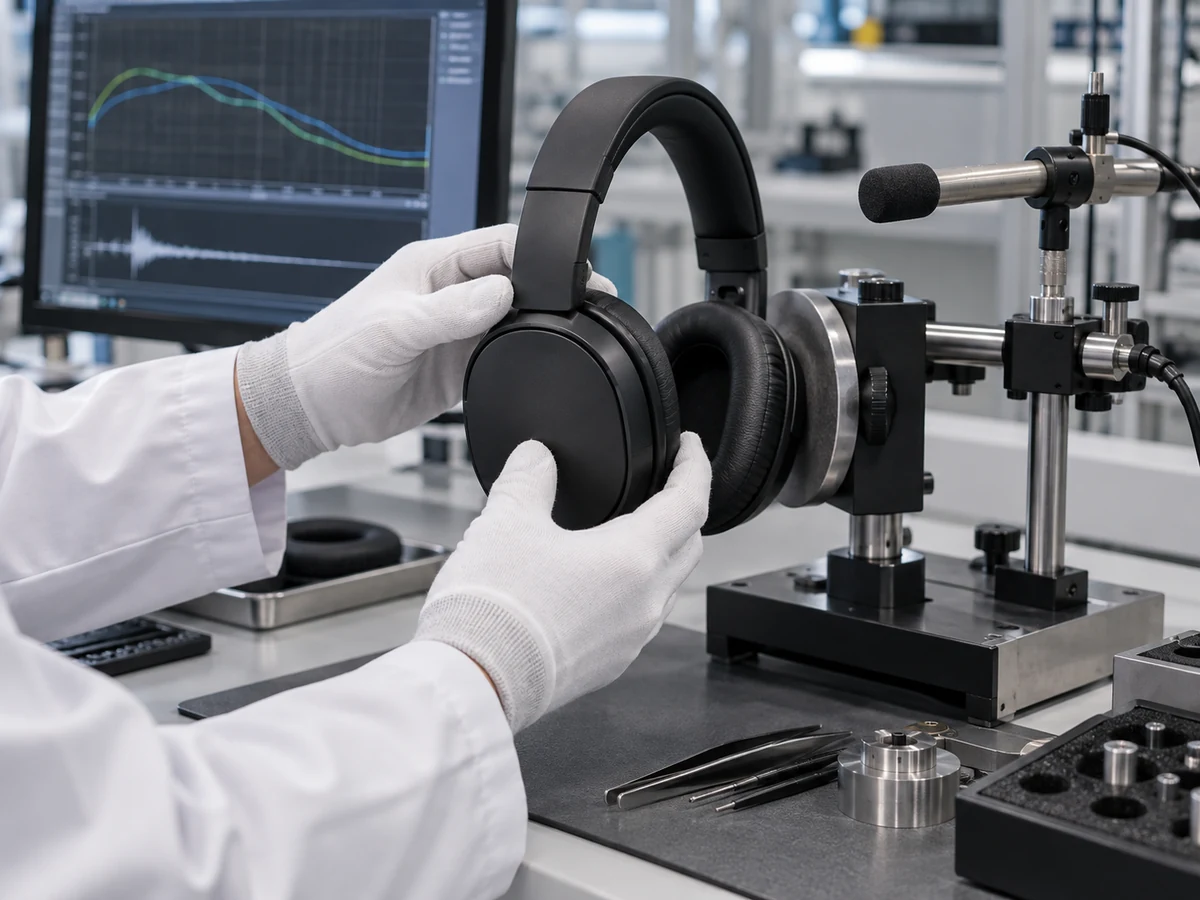
A practical look at incoming inspection, acoustic checks and production references in headphone manufacturing.
Quality starts before final inspection
A finished headphone combines electronic, acoustic and mechanical parts. Consistency depends on more than checking whether music plays at the end of the line. The incoming materials, assembly reference and test criteria must describe the same product. For a private-label project, this means agreeing the details before mass production begins and keeping an approved sample available for comparison.
Look at the complete test process
Our quality facilities include incoming inspection areas, acoustic testing equipment, Bluetooth testing, ANC testing and battery evaluation facilities. The facilities also include mechanical test equipment for cable bending, buttons, connectors, vibration and drops. The relevant checks depend on the model and the order specification; the presence of equipment is not a claim that every product carries every test result or certification.
Make acceptance criteria specific
A useful inspection brief identifies what should be measured and how a result will be assessed. Buyers can request checks for left and right channel operation, microphone pickup, pairing, control functions, charging and visual finish. Packaging and accessory counts matter as well. For comfort and subjective listening, agree the evaluation method and use the same reference sample throughout the project.
Keep records tied to the order
A test report is most useful when it identifies the actual model, configuration and production lot. Changes to a battery, acoustic component or material should be reviewed against the agreed requirements. When discussing an order with Owin Electronic, include your inspection requirements early. This allows the team to discuss the test scope, required documents and any project-specific evaluation before production is scheduled.