
A headset microphone must be judged in the complete communication system
Microphone performance is one of the most important and most easily oversimplified parts of a business or gaming headset. Product sheets may list sensitivity, frequency response, microphone size or environmental noise cancellation, yet those values do not automatically predict how a user will sound on a real call. Voice pickup depends on the microphone capsule, boom geometry, acoustic ports, electronics, digital processing, wireless link, computer or console, communication application and the room around the user. For OEM buyers, the goal is to define the intended communication environment and test the exact sample in that environment. A clear specification supports comparison, but a complete call workflow is what reveals whether the product meets customer expectations.
Begin with the use case and noise environment
An office worker in a private room, a call-center agent, a remote employee near household noise and a gamer using an open microphone have different requirements. State the typical distance from the mouth, call duration, background sound, devices and software. Decide whether the user needs a flexible boom, a rotating boom, a detachable microphone or an integrated microphone array. A single-ear business headset may prioritize awareness and speech intelligibility, while a gaming headset may balance voice quality with a larger acoustic design and multiple connection modes. The supplier can only recommend a meaningful microphone configuration when the brief explains where and how the headset will be used.
Distinguish microphone pickup from output noise reduction
Terms such as ENC, AI noise reduction and noise-canceling microphone are used broadly. They may describe different processing methods, microphone arrangements or performance goals. Microphone noise control concerns the signal sent to the other side of the call. Active noise cancellation usually refers to reducing the sound heard by the wearer. The two functions are separate even when one product contains both. Ask which microphones and algorithms support the call path, which connection modes use the processing and whether settings change between applications. Avoid assuming that an ANC headset automatically provides superior outgoing voice quality. The microphone system requires its own sample review.
Understand directional and omnidirectional choices
An omnidirectional microphone captures sound from a broad range of directions and can provide natural voice pickup when positioned correctly. A directional microphone can reduce sound arriving from certain angles, but its practical result depends on orientation and boom placement. The label alone does not guarantee background-noise rejection. A directional capsule pointed away from the mouth may sound worse than a well-positioned omnidirectional design. Mechanical tolerances also matter because the microphone port must remain aligned. Buyers should review the polar behavior, intended orientation and sample consistency. If the boom rotates for left- or right-side use, confirm whether the microphone performs correctly in both positions.
Treat sensitivity as a test condition, not a quality score
Microphone sensitivity indicates electrical output for a defined sound pressure, usually expressed with a reference and tolerance. A more negative or less negative value is not automatically better. The electronics and digital gain can compensate within limits, while too much gain may raise background noise or create clipping. Compare values only when the reference, frequency and unit are the same. The finished headset should be tested at normal speaking distance and level. Listen for quiet speech, loud speech, plosives and sibilance. Check whether the system maintains a useful level without pumping, sudden gain changes or audible distortion.
Review frequency response for intelligibility and naturalness
A communication microphone does not need to reproduce every low and high frequency in the same way as a studio microphone. The useful response should support clear speech and the intended network or application bandwidth. Excessive low-frequency pickup can emphasize handling, breath or room noise. Too little low-mid information may make voices thin. Strong upper-mid energy can improve intelligibility but become harsh if overdone. A stated frequency range without a response curve or tolerance tells little about the tonal result. Use recorded samples and live calls to judge whether different speakers sound clear and recognizable. Include male and female voices and, where relevant, multiple languages or accents represented by the target users.
Make boom geometry part of the specification
Boom length, rotation, flexibility and holding strength affect microphone consistency. The microphone should reach a repeatable position near the side of the mouth without blocking vision or touching the face. A flexible boom must stay where the user places it. A rotating joint should not loosen after normal use. If the boom provides a mute function when raised, test the activation angle and software feedback. For detachable designs, review the connector strength and orientation. A strong capsule cannot compensate for a boom that places it too far away or points the port incorrectly. Mechanical review should therefore happen together with voice testing.
Test plosives, breath and handling noise
Speech contains bursts of air that can overload a microphone when it is placed directly in front of the mouth. Acoustic mesh, foam and port orientation can reduce plosives, but they also influence frequency response. Users may touch the boom, adjust the headset or type during a call. The sample test should include these real interactions. Listen for thumps from boom movement, cable rubbing on wired models, hinge noise and keyboard pickup. A call-center or office product may need a different balance from a broadcast-style microphone. The objective is controlled, intelligible speech during normal use rather than an artificial recording made in ideal conditions.
Evaluate noise processing with several noise types
Noise-reduction algorithms can behave differently with steady air-conditioning noise, nearby speech, keyboard clicks, traffic or music. A single demonstration may favor the algorithm. Create a repeatable set of realistic scenes and compare the processed voice with the unprocessed or reference result where possible. Strong processing may reduce background sound but also make speech choppy, metallic or incomplete. Check sentence beginnings, pauses and soft voices because gating can remove useful content. Record both sides of the call. The person wearing the headset cannot fully judge what the remote participant hears. Buyers should define an acceptable balance between background reduction and voice naturalness.
Check every connection path and application
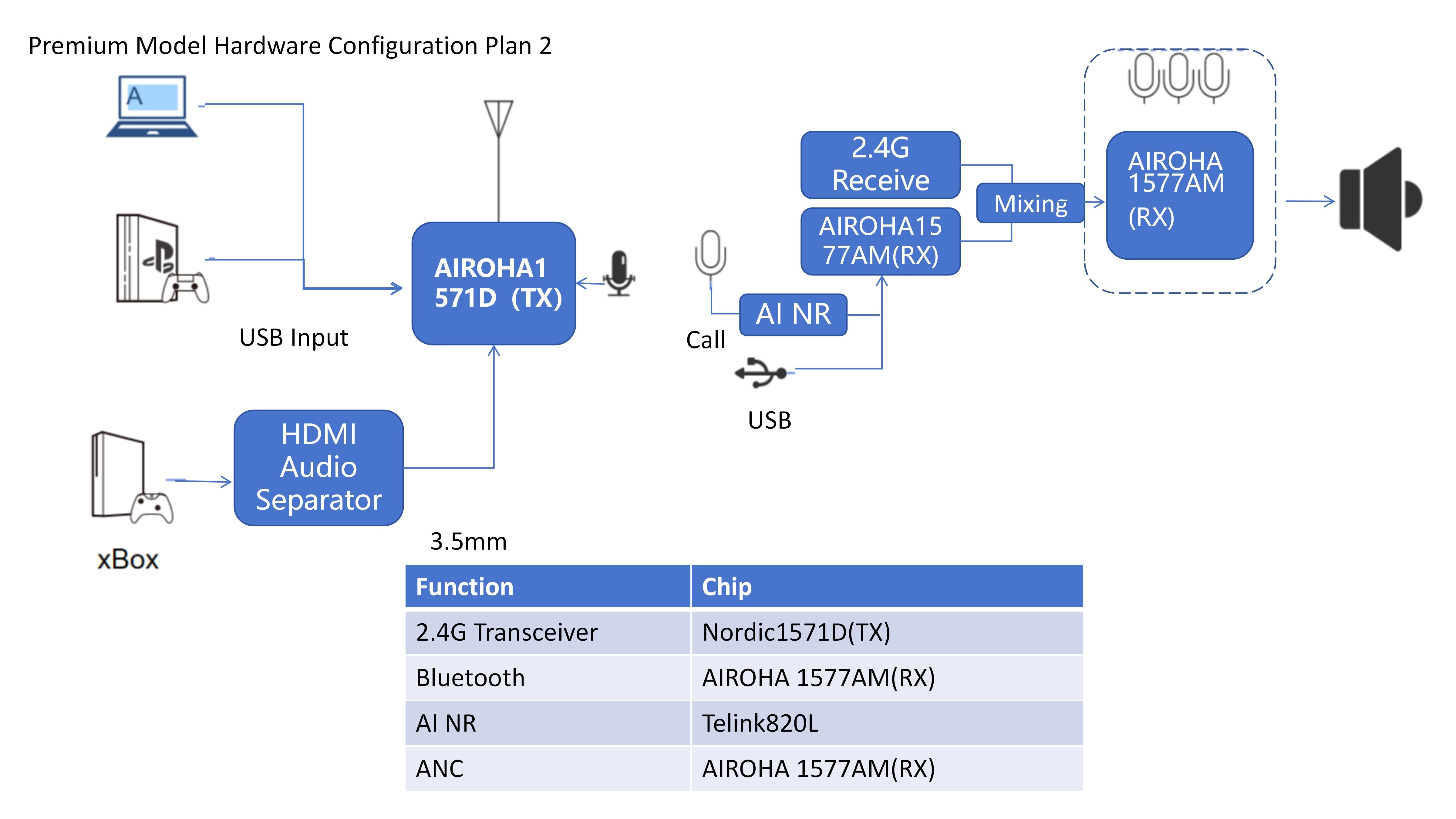
A headset may use USB, 3.5 mm, Bluetooth and a 2.4 GHz receiver. These paths can use different electronics, codecs, gain settings and processing. The microphone may perform well through a USB receiver but change in Bluetooth call mode. A mobile phone, Windows computer, console and conferencing application can apply their own processing or automatic gain control. Test the combinations that matter to the product brief. Confirm device recognition, mute behavior, sidetone and control compatibility. If a feature works only in one mode, state that clearly in the product material. Model-specific compatibility is more reliable than a broad claim that the headset works identically everywhere.
Include sidetone and mute behavior in the review
Sidetone lets users hear part of their own voice and can reduce the tendency to speak too loudly, especially with closed headphones. The level should be comfortable and free from distracting delay or noise. If sidetone is adjustable, review the default and reset behavior. Mute controls must be easy to understand. A physical button, boom-to-mute action, indicator light and software icon should agree. Test what happens after reconnecting, waking the computer or switching modes. Communication products are judged not only by raw microphone sound but also by whether users can trust the controls during an important call.
Design a repeatable sample test
Use the same room, source devices, applications, speaking distances and noise playback when comparing samples. Record a script that includes normal speech, soft speech, loud phrases, plosives, pauses and numbers or names that reveal intelligibility. Have several speakers use the headset because head shape and boom placement vary. Capture the remote signal rather than relying only on local monitoring. Note firmware, connection mode and application settings with every file. A structured comparison makes it easier to identify whether a revision improved noise control, level, tone or mechanical positioning. It also creates evidence for approving the final configuration.
Plan production controls for microphone consistency
Production tests should confirm that the microphone path works and meets the agreed limits. The scope may include electrical checks, acoustic level, frequency points, channel or port verification, mute operation and wireless call tests. Fixtures can control the distance and orientation between the product and sound source. Critical materials such as microphone mesh, foam and seals should remain linked to the approved bill of materials. If a capsule or algorithm changes, validation may be required before production continues. A golden sample and controlled recordings can support comparison, but the factory also needs measurable limits and revision records.
Frequently asked questions
Does a dual-microphone headset always reject more noise?
No. Additional microphones can support directional or noise-processing methods, but placement, algorithms, tuning and use conditions determine the result. Evaluate the finished sample in realistic noise instead of relying on microphone count.
Is ENC the same as ANC?
No. ENC is commonly used for outgoing voice-noise reduction, while ANC usually reduces environmental sound heard by the wearer. Product terminology varies, so ask the supplier to explain the exact function and signal path.
Should a gaming headset use a detachable boom?
That is a product decision rather than a universal rule. Detachable booms support flexible use and replacement, while fixed booms can simplify storage or electrical design. Compare connector durability, orientation, mute behavior and the target customer workflow.
What should an OEM buyer request with microphone samples?
Request the exact firmware and connection configuration, microphone specifications with test references, supported processing modes, a sample test plan and any known compatibility limits. Provide your intended devices, applications and noise scenes so the supplier can prepare a relevant evaluation.
Approve real communication performance, not a single specification
Microphone sensitivity, directionality and frequency response are useful inputs, but they become meaningful only inside the finished headset and call system. A strong OEM review connects acoustic specifications with boom mechanics, noise processing, connection modes, controls, applications and production testing. When buyers test the complete workflow and document the approved configuration, they can describe voice performance more accurately and reduce surprises after launch.